
I was talking to my bothers friend who is a mechanic. He said to just drain the pan and once it's drained start the car for about 5 seconds and some more oil should come out. Then just fill it back up an you'll be good to go. The tranny doesn't like it when you shock it with all new fluid. I think that's what I'm going to do

You are using an out of date browser. It may not display this or other websites correctly.
You should upgrade or use an alternative browser.
You should upgrade or use an alternative browser.
HOW TO: Changing Transmission Fluid
- Thread starter shralp
- Start date
EnjoyDriving
Member
- Location
- MN
I agree with the "shock by new oil" saying and that's why it's recommended to do the "drain from pan" a couple times between 1000 miles - hehehe - as long as I'm not racing it nor climbing hills all day long with it, that should be good enough. However, i'm not too sure about starting up the car and running it with an empty pan though :tongue (2): Too scary and too expensive to try it on my own. But if you will do it - remember to post back the result and experience, okay. :bomb:
I was talking to my bothers friend who is a mechanic. He said to just drain the pan and once it's drained start the car for about 5 seconds and some more oil should come out. Then just fill it back up an you'll be good to go. The tranny doesn't like it when you shock it with all new fluid. I think that's what I'm going to do
WietseFX35
Member
- Location
- Netherlands
- Car
- 2009 FX50S AWD
I think that is the best/easiest way as wel.
But i still don't understand the shock effect when filling with new oil.
This tranny is designed to work on this oil, how on earth can a oilchange create problems.
This same thing doesn't happen with the engine either.
Anyway strange way of service, i know that normally there is a lot of oil staying behind in the torque converter so not all quantity will come out when you drain the pan.
But i still don't understand the shock effect when filling with new oil.
This tranny is designed to work on this oil, how on earth can a oilchange create problems.
This same thing doesn't happen with the engine either.
Anyway strange way of service, i know that normally there is a lot of oil staying behind in the torque converter so not all quantity will come out when you drain the pan.
EnjoyDriving
Member
- Location
- MN
Same here - I'm aware of the ill effect from the "flushing" the tranny, and maybe that's what they really referring to as "100% new oil" because like you said, there is no way to get all the oil out by "draining and refilling" - the only way is to "flush" it completely.
I think that is the best/easiest way as wel.
But i still don't understand the shock effect when filling with new oil.
This tranny is designed to work on this oil, how on earth can a oilchange create problems.
This same thing doesn't happen with the engine either.
Anyway strange way of service, i know that normally there is a lot of oil staying behind in the torque converter so not all quantity will come out when you drain the pan.
WietseFX35
Member
- Location
- Netherlands
- Car
- 2009 FX50S AWD
As i mentioned before, i think that the manufacturer came up with this flush idea from the cooler hose is to flush the cooler.
That is the most common spot where all sludge will settle and will give cooling problems.
You can "easy" drain it from the pan or flush it the hard way trough the cooler.
I think that with driving 50K miles on the same oil will not give so much contamination to block the cooler anyway so in the near future is will also do a few flushes by draining the pan.
That is the most common spot where all sludge will settle and will give cooling problems.
You can "easy" drain it from the pan or flush it the hard way trough the cooler.
I think that with driving 50K miles on the same oil will not give so much contamination to block the cooler anyway so in the near future is will also do a few flushes by draining the pan.
- Location
- Riverside, CA
So I just got done doing this. Instead of tapping into the lines, I just simply unbolted the drainage bolt. I drained about 4 qts (I measured) doing this. Pretty simple and I noticed that the S matic fluid isn't as viscous as other fluids. I took it for a spin and tranny feels a bit smoother (It may be psychological ^_^
Last edited:
Giles
Member
- Location
- Florence Alabama USA
- Car
- 2008 FX35 sport
Many years ago, I worked in a large Indipendant garage, Two different Auto dealerships and was service manager for AAMCO Transmission. I went to every tech. school available at the time.
I know that automatic transmissions today are very different then when I worked on them, but I think one thing is basically the same.
With my vehicles, I never change the automatic transmission fluid unless there is a noticable change in color.
Transmission fluid and motor oil are not the same--Motor oil never wears out, it gets dirty and contaminated. Transmission fluid wears out and looses it"s viscosity mainly from HEAT. You can see for yourself by dipping your fingers in "worn out fluid" and rubbing them together. Do the same with new fluid and it is evident that new is slicker.
During my years of work, I discovered that when you change trans. fluid too late, the inside of the trans. has a coating of burned fluid that will be cleaned with the new fluid. This could cause problems.
Pleas take my OPINION with a grain of salt, this is just the opinion of an "old mechanic" that may be to stubbern to adapt new ideas and opinions.
I know that automatic transmissions today are very different then when I worked on them, but I think one thing is basically the same.
With my vehicles, I never change the automatic transmission fluid unless there is a noticable change in color.
Transmission fluid and motor oil are not the same--Motor oil never wears out, it gets dirty and contaminated. Transmission fluid wears out and looses it"s viscosity mainly from HEAT. You can see for yourself by dipping your fingers in "worn out fluid" and rubbing them together. Do the same with new fluid and it is evident that new is slicker.
During my years of work, I discovered that when you change trans. fluid too late, the inside of the trans. has a coating of burned fluid that will be cleaned with the new fluid. This could cause problems.
Pleas take my OPINION with a grain of salt, this is just the opinion of an "old mechanic" that may be to stubbern to adapt new ideas and opinions.

Many years ago, I worked in a large Indipendant garage, Two different Auto dealerships and was service manager for AAMCO Transmission. I went to every tech. school available at the time.
I know that automatic transmissions today are very different then when I worked on them, but I think one thing is basically the same.
With my vehicles, I never change the automatic transmission fluid unless there is a noticable change in color.
Transmission fluid and motor oil are not the same--Motor oil never wears out, it gets dirty and contaminated. Transmission fluid wears out and looses it"s viscosity mainly from HEAT. You can see for yourself by dipping your fingers in "worn out fluid" and rubbing them together. Do the same with new fluid and it is evident that new is slicker.
During my years of work, I discovered that when you change trans. fluid too late, the inside of the trans. has a coating of burned fluid that will be cleaned with the new fluid. This could cause problems.
Pleas take my OPINION with a grain of salt, this is just the opinion of an "old mechanic" that may be to stubbern to adapt new ideas and opinions.
When you say change out the fluid "too late" as in passed the manufacturer's recommended mileage change interval?
Giles
Member
- Location
- Florence Alabama USA
- Car
- 2008 FX35 sport
First, let me state that I don't want to sound like I know it all, I learn something new every day and find it very difficult to keep up with modern technology. IMO the manufacturer's recommended oil change is an "average" If most of the miles were in town, or pulling a trailer, I would change sooner.
You have to consider that if you were to pull a loaded trailer for an extended length of miles or your driving is strickly in town with frequent stop and go--your fluid should be changed B4 recommendation.
My driving conditions are "normal" and if the recommended fluid change is --say 100K miles, I would check the condition of my fluid.
MANY times, a person would come into my shop with severly burned fluid and would want a fluid change. I would tell the person that if the transmission was working properly, I would not change the fluid.
Some would want it changed anyway and almost every time they would return with a defective dransmission. During disassembly, it was evident that the detergent action of the new fluid had broken down the varnish like buildup of the entire interior of the unit--including clutches!
So, I would make the recomendation that--to be safe-- fluid should be changed as recommended by the manufacturer.
When I worked on transmissions, they had drain plugs on the oil pan and torque converter. Nearly all fluid could be changed.
Draining and adding app. half the amount of fluid is similar to changing half of your motor oil
I would like to make a statement about auto mechanics today---Most are "parts changers". I dought if many mechanics could rebuild the modern transmission of today and I seriously dought if I could.
It is sad that Skill is being lost by the day, even with engine rebuilding.
In my "hot rodding" days, everyone built their own engines, for street rods. Today, most just buy a crate engine.
You have to consider that if you were to pull a loaded trailer for an extended length of miles or your driving is strickly in town with frequent stop and go--your fluid should be changed B4 recommendation.
My driving conditions are "normal" and if the recommended fluid change is --say 100K miles, I would check the condition of my fluid.
MANY times, a person would come into my shop with severly burned fluid and would want a fluid change. I would tell the person that if the transmission was working properly, I would not change the fluid.
Some would want it changed anyway and almost every time they would return with a defective dransmission. During disassembly, it was evident that the detergent action of the new fluid had broken down the varnish like buildup of the entire interior of the unit--including clutches!
So, I would make the recomendation that--to be safe-- fluid should be changed as recommended by the manufacturer.
When I worked on transmissions, they had drain plugs on the oil pan and torque converter. Nearly all fluid could be changed.
Draining and adding app. half the amount of fluid is similar to changing half of your motor oil
I would like to make a statement about auto mechanics today---Most are "parts changers". I dought if many mechanics could rebuild the modern transmission of today and I seriously dought if I could.
It is sad that Skill is being lost by the day, even with engine rebuilding.
In my "hot rodding" days, everyone built their own engines, for street rods. Today, most just buy a crate engine.
- Location
- Riverside, CA
Well, I learned about transmission fluid the hard way. I never changed my transmission fluid on my 2001 Honda Accord until it was about 120k on the odometer. I experienced massive slippage and it was really dangerous to drive my car. i went to flush my transmission fluid and the fluid was completely black and it was pretty apparent that it was wayyyyyy past due. Now, I regularly drain and fill all my cars to avoid the headache later.

So I just got done doing this. Instead of tapping into the lines, I just simply unbolted the drainage bolt. I drained about 4 qts (I measured) doing this. Pretty simple and I noticed that the S matic fluid isn't as viscous as other fluids. I took it for a spin and tranny feels a bit smoother (It may be psychological ^_^
Might be a dumb question, but do you start the car and then fill with new fluid while in idle? Going to do this on my M this weekend.

- Location
- Dallas, TX
- Car
- 2007 FX35 RWD
Bump for an answer to Jeff's question, or maybe Jeff can answer himself now?
Giles
Member
- Location
- Florence Alabama USA
- Car
- 2008 FX35 sport
Just a little history from an old retired mechanic------Many years ago, when I ran a transmission repair shop, nearly all units had a drain plug on the oil pan and on the torque converter.
As a cost cutting measure these drain plugs were eliminated by nearly all manufacturers.
On many units, if the customer wanted, we would install a drain plug in the pan and the torque converter.
The torque converter was a little tricky and had to be done carfully.
The oil pan required that the pan be drilled, in the proper spot, to guarentee non-interference with internal parts above it.
The simplest way I found was to use an oil pan drainglug, with gasket, and weld a matching "thin nut" to the inside of oil pan.
Groove were cut on the nut to allow fluid to drain down to the pan surface before the nut was "CAREFULLY SPOT WELDED" to the thin pan. Too much heat will distort the pan and sealing of the drainplug will be difficult.
If anyone has the tools and ability to do this, it could be considered and would greatly simplefy fluid drainage. especially since all the fluid would eventually be refreshed from several drainings and refill.
I do not know if a drain plug would be possible for the torque converter because older units had a dust shield that could be removed to access drilling and tapping.
The averave unit, back then, held a total of app. 12 quarts, and draining both the transmission and torque converter resulted in replacing app. 10 quarts.
Today--I personally feel that a flush, with the correct machine, is the best solution.
As a cost cutting measure these drain plugs were eliminated by nearly all manufacturers.
On many units, if the customer wanted, we would install a drain plug in the pan and the torque converter.
The torque converter was a little tricky and had to be done carfully.
The oil pan required that the pan be drilled, in the proper spot, to guarentee non-interference with internal parts above it.
The simplest way I found was to use an oil pan drainglug, with gasket, and weld a matching "thin nut" to the inside of oil pan.
Groove were cut on the nut to allow fluid to drain down to the pan surface before the nut was "CAREFULLY SPOT WELDED" to the thin pan. Too much heat will distort the pan and sealing of the drainplug will be difficult.
If anyone has the tools and ability to do this, it could be considered and would greatly simplefy fluid drainage. especially since all the fluid would eventually be refreshed from several drainings and refill.
I do not know if a drain plug would be possible for the torque converter because older units had a dust shield that could be removed to access drilling and tapping.
The averave unit, back then, held a total of app. 12 quarts, and draining both the transmission and torque converter resulted in replacing app. 10 quarts.
Today--I personally feel that a flush, with the correct machine, is the best solution.
- Location
- Dallas, TX
- Car
- 2007 FX35 RWD
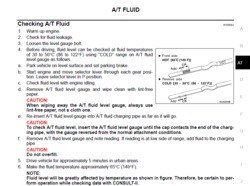
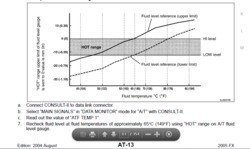
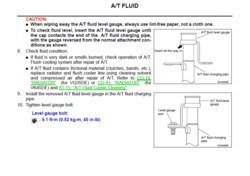
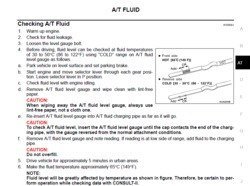
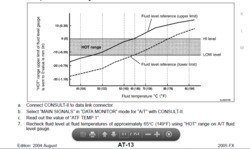
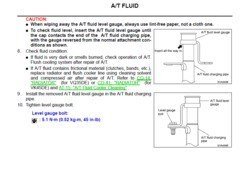
Wondering if you need to check the fluid level like you do with oil? When you change oil you remove all the oil and replace with 5 new quarts, so it's not likely to underfill. But with the tranny, if it's already low, just taking out 5 quarts and replacing 5 quarts only refreshes the fluid but won't replace to the exact correct amount.
Basically, I'm just wondering if it's possible for tranny fluid to be low, and is it easily checked with the dipstick?
Basically, I'm just wondering if it's possible for tranny fluid to be low, and is it easily checked with the dipstick?
Wondering if you need to check the fluid level like you do with oil? When you change oil you remove all the oil and replace with 5 new quarts, so it's not likely to underfill. But with the tranny, if it's already low, just taking out 5 quarts and replacing 5 quarts only refreshes the fluid but won't replace to the exact correct amount.
Basically, I'm just wondering if it's possible for tranny fluid to be low, and is it easily checked with the dipstick?
Yeah I'd like to know this too. I had the Transgo put in last month and I was wondering if I should check my tranny fluid level every once in awhile? Though the dipstick is a pain to get to.
Share: