Trans coolers

erik tovar

Member
Car
2005 fx35 awd
Name
erik tovar
Hey guys what trans coolers are you running ? Why ? And where did you get them from ?
 
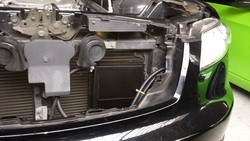
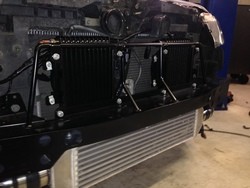
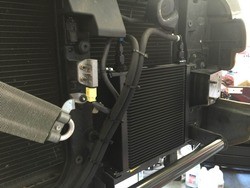
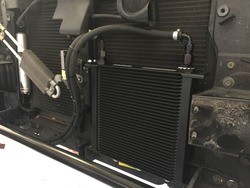
I just bought a B&M SuperCooler 70268 as that size fits (it's universal). Then I bought about 8 ft. of transmission line at AutoZone. There aren't any specific kits but it takes maybe 90 minutes to mount everything and run the lines. I think the B&M was ~$70, it's been a few years so I can't remember.
 
No leaks. Initially had a small one where the fluid was "seeping" from the connector but tightened the clamp and it went away. If you use the same size line as stock, there shouldn't be any leaks.
 
so you guys disconnect the lines from radiator and just run them to the after market one ? Iv read some guys run the oem and a after market one in sequence I feel that's to much am I right ?
 
I kept the OEM - you need the radiator to help warm up fluid. There is such a thing as overcooling the fluid, if it never warms up, that's a problem. There is an optimum range for the fluid. The extra cooler is just there to prevent the OEM cooler from being "overloaded".
 
I bypass the oem. It leaked and mixed with tranny oil. Coolant Fried my clutch packs.
I believe my External cooler has bypass for initial warmup of fluid, then it goes to work at operating temp.
 
That works well too. I considered getting an external thermostat/bypass but then thought it would be overkill for my needs. I don't track my car like you; if I did, I would likely have gone your route.
 
Well what would you guys recommend I tow a tent trailer and small jet ski and planning on running 75 shot of nos sometime lol
 
If you don't run the external cooler in line with the OEM, you'll need a bypass. It's just a valve that won't open until a certain temperature. So when you first start the car up, fluid isn't going to your external cooler until the fluid warms up to a certain temperature like 180 degrees at which point it opens and fluid flows through to the cooler. I don't run one because I run inline with OEM so it's still passing fluid through radiator.

And to answer your other question, any cooler works if it fits. GTO's is much nicer than mine but they both do the job. If you plan to tow, definitely get a cooler. The nitrous doesn't have any bearing on whether or not you need a cooler. You're only going to spray for short periods of time and that isn't going to really do much to fluid temperature. I would consider getting a valve body mod like the Transgo though. That firms up the shifts and prevents slipping during shifts which is a much bigger worry if you spray or have forced induction of any kind.
 
Ima run mine in line with the oem one then sounds like less maintenance and easyer install , ya before I install I'm getting a valve body for sure, thanks for the input guys
 
I also have B&M 70298 Hi-Tek transmission cooler, with zero issues.
I'm looking at the 70298 for engine oil & 70297 for transmission. Been trying to determine if a thermostat to operate oil flow is necessary. Mocal sandwich plate is on the list for oil but the transmission is a different deal.
Planning on running the cooler in-line w/the stock radiator for 2 reasons;
1, the built-in cooler in the radiator will help bring trans temps up quickly & per Mocal, 80% chance no thermostat to control oil flow will be necessary if run this way, especially in my mild climate and
2, there's a reasonable amount of capacity in the stock cooler, so might as well use it as I've read some that have bypassed it didn't get the added cooling benefits they hoped for.
Will replace this 15 year old radiator also so my fx hopefully does not pull a rare GTO on me. Sorry GTO, not funny.
Below is a copy of what's written on Mocal's site. Anyone know if it's a 3/8" or 1/2"?
"Oil Thermostat Push-on OT1 Type Part # Description Price A0T1 1/2 Push-on $74.25 A0T1-HT 1/2 Push-on High Temp* $79.95 A0T3 3/8 Push-on $81.90 A0T3-HT 3/8 Push-on High Temp* $84.50 High temp (95c / 203f) versions ----- are best suited for regulating flow to automatic transmission coolers in colder than average climates." -----
 
Back
Top