Typically when a starter goes that early, it's likely the relay inside the starter has gone. The reason why this happens is usually the result of a weak battery. Most people won't realize they have a weak battery until it's literally at the very end of its life. By then you're going to need a new starter and hopefully not a new alternator.
I know it sounds crazy but here's the reason why...I know the next paragraph looks massive but sit back and please read..it's worth it
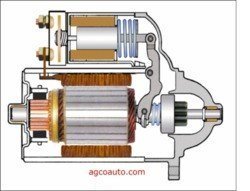
Car batteries hold a lot of cranking amps...as batteries age, they loose their cranking amps slowly...as that declines and reaches a certain level, the alternator starts to work a little harder to keep the battery topped up or close to that...so then the next time you start the car..you don't really notice its weak because the battery has been slowly declining..you've been slowly accustomed to the slightly lower performance that is inaudible and unoticeable...but there's something else that starts to happen...and this happens with the relay plates inside the starter...this relay isn't your typical relay you see under a fuse box..this is a massive relay that is part of the electromagnet that does two things.
First it pushes out the gear from the starter motor to connect to the flywheel and secondly as the magnet reaches the end of its path, there are copper plates that complete the circuit and positive power comes directly through a thick cable straight from the battery directly to the relay and then the starter motor. The only thing that has a fuse is the electromagnet itself which is what your ignition switch powers, the starter motor is powered by the battery directly once that relay connects.
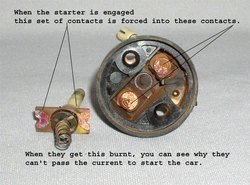
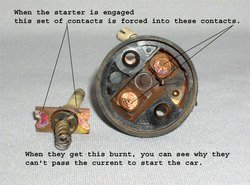
Now..because the battery slowly declines in total amperage output, it's not exactly a problem when the battery is still over a good cranking amperage but as it gets closer to it's halfway point, the battery no longer has enough cranking amps to power the starter and keep the relay fully seated thus causes arcing between the copper plates. As some of you may know, copper is a great conductor but very soft when it comes to physical or electrical damage.
Now as your battery continues to decline and the more you keep using your starter, those plates are burned more and more until no more contact is possible. When that happens, your starter won't turn, you'll hear a click likely under the dash which is your normal relay but your starter's relay will click too but not crank. That's because the plates are gone and it won't be able to create a circuit to power the starter motor.
Now the fix is actually quite cheap if you're willing to do it yourself. You just need to order the relay and then just swap it out on your starter. I've never done this on my FX but did so on my Maxima and this was exactly why and the battery was the culprit...a $100 part killed a $500 part and another $300 part..insane! but completely true.
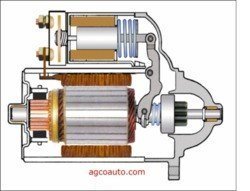
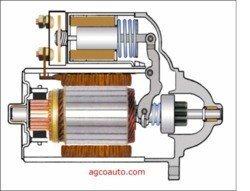
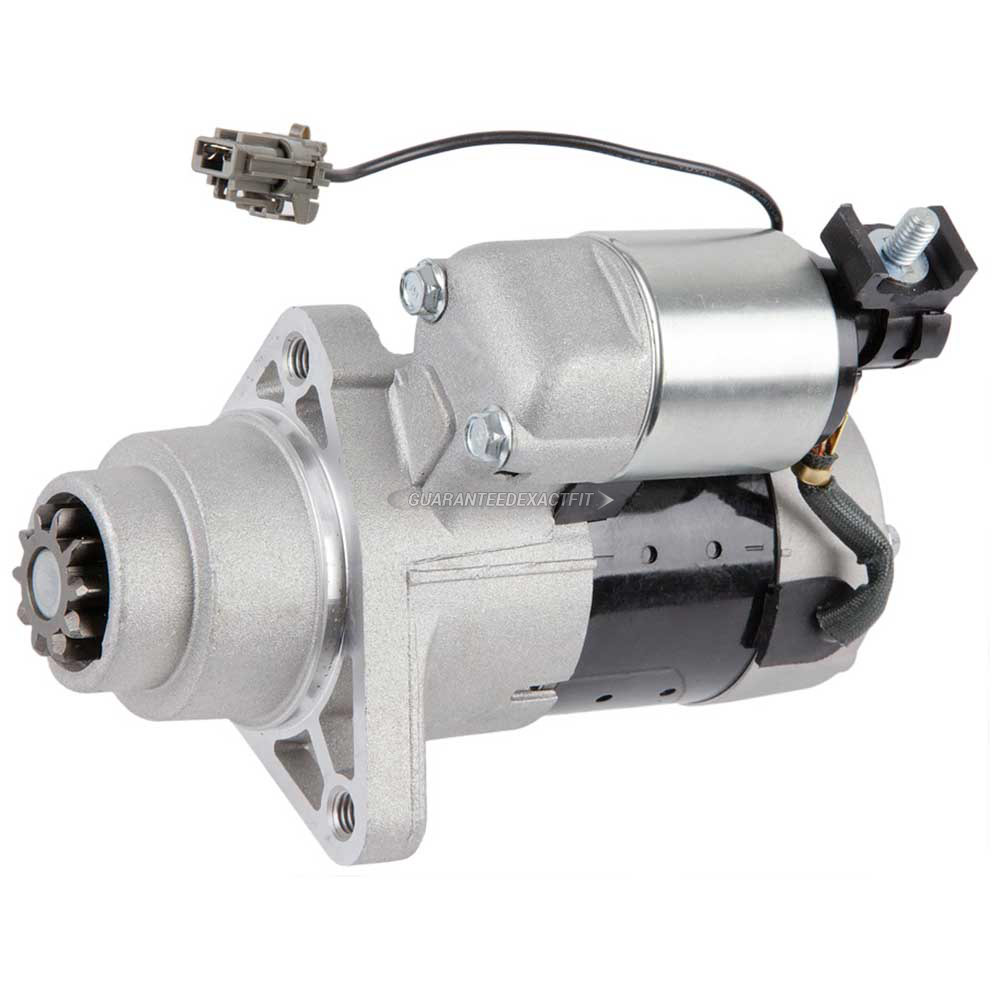
So here's what a starter looks like..yes we all know this guy...its a visual reference so I can explain...
That bump on the side of the starter..that's the relay/electromagnet...it is the guy that powers up, magnetically moves a lever inside the starter to push out the gear to make contact with the flywheel AAAAND...create a circuit to power the starter ONCE the gear has fully extended to reach the flywheel..

That bump as I call it...see the two bolts...pop those babies off, take off that electromagnet/relay, pop the new one on and you're back in business!!
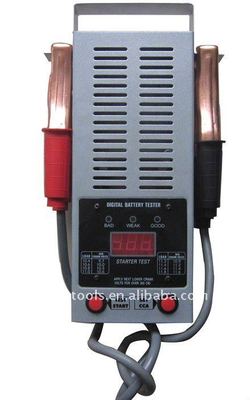
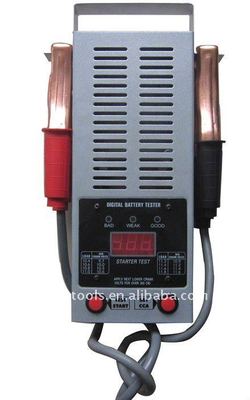
How did I avoid this from happening again...I bought a battery tester..no not a voltage meter but one of those testers that you can get for around $20-$40, you put the clamps on the battery and flip a switch that puts a big load on the battery and the dial or the digital screen shows you if the battery is still good or its on it's last legs...
Ever wonder why your car's lights, dash, radio, etc turn off when you start? It's to maximize the battery's ability to fully satisfy the starter's needs at most of the battery's potential life... A battery can only put out so much current at once but if the battery is weak...it's most likely not even satisfy the starter fully and thus causes arcing of the copper plates. To get a little more in depth on this part, the reason why arcing occurs is because the starter motor is eating all the cranking amps leaving very little to nothing behind depriving the electromagnet from holding a proper fully seated connection on the copper plates..the magnet releases which cuts off the power from the motor giving enough power to re-engage the magnet which then goes back to providing power to the starter motor then depriving the magnet again. This happens very quickly and you won't know or hear it. If you do, your starter is probably about to go dead soon....
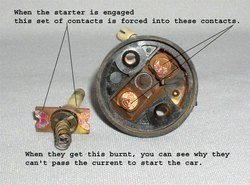
Here's what the starter looks like inside...
Here's what the copper plates look like....
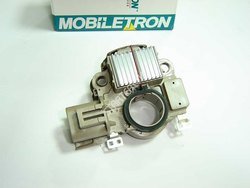
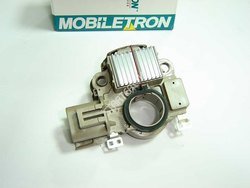
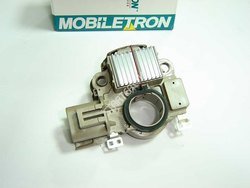
Now in terms of the alternator, sometimes they die and its not the whole alternator but the regulator inside that regulates how much current to push to the battery. When your battery is healthy, the alternator works part time turning on and off or keeping a steady charge rate on the battery...as your battery weakens...that regulator starts to kick in more often...and overtime as the battery becomes weaker...the regulator kicks in even more often to the point where it just stays on...at 100% to keep the systems powered...this produces heat...excessive heat and even more so during a warm season..summer...where your engine is contributing it's own heat the the regulator...it eventually gives up and fries...
Once again..you don't need a new alternator..just the regulator....as so...
The regulator is at the back of the alternator underneath a metal shield which controls current flow and holds the brushes (all in one package I guess).
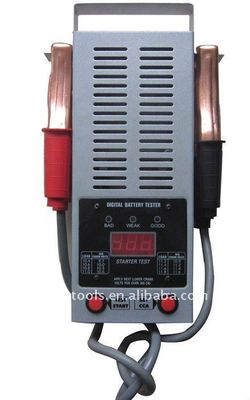
Here's a photo of the battery tester...these are usually cheap and on sale but do the trick..or you can go to a more expensive solution or get your dealer/mechanic to throw on a professional one and get a better reading on it's status. Do this once a year, and save yourself from expensive tows and repair bills. Just make sure it's a battery tester that puts a load on the battery, that's what you need. Without a load, most batteries look flawless, that's just how it is.
Hope you guys have enjoyed my lengthy post but honestly it's worth it...and I wanted to be very thorough so it's understandable... and hopefully this saves you guys some money...