
themadnewfie
Member
Wanted to say thanks for this thread and share my before and after
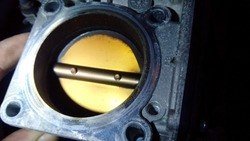
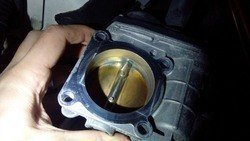



OP is Mr. iS Teddy hoarderWhat happened to all the pics for the instructions?

disconnecting the battery isn't doing anything to prevent any errors being recognized, errors are prevented by being gentle with the butterfly itself. be very gentle and don't let it snap closed and you will be fine even without the battery disconnect, I've done this many many many times.
how this system works is the throttle body at rest de energized gives a very specific voltage reading. it always returns to this exact same specific resting position giving the exact same voltage reading unless it's faulty, or it's re calibrated, or its disturbed by snapping it closed, knocking it out of calibration.
as an example, lets say any particular TB at rest is programmed as throttle closed reading of 1.16V... as long as the ecu sees the throttle at this 1.16v at rest it sees everything as ok, no problem and it will always show the 1.16v at rest as long as there are no problems. now lets say you open the throttle plate and let it snap closed even partially on just the return spring pressure. what this will do is simply knock it out of calibration... the NEW rest position reading may now be 1.21v, or it may be 1.10v, whatever it is now it is no longer PRECISELY what the computer expects to see, so it sees this as an error. the "fix" would be to reset the learned at rest position, which would then re teach the ECU the new closed position reading of the new reading of 1.21v or the 1.10v or whatever it may wind up being....
the resting position calibration is delicate and easily shocked or otherwise disturbed but when carful you should not have an issue... always use a non abrasive stick or something to make sure you don't accidentally let it snap whenever holding it open and also don't force it in any way... I use a screwdriver but you have to be very careful not to knick anything or make scratches, a wooden stick would be safer for a novice.
along these lines it is also not really necessary in most cases to even remove the throttle body at all, it is very practical and satisfactory to open the throttle plate gently and clean the edges and the resting areas and get just as good results for the most part, of course the more you disassemble the more you will be able to clean better but following that train of thought then why stop at just the throttle bodies?, may as well do the whole intake too... point being you really don't NEED to do more than just clean the TB's right there while still bolted on the engine, especially if your going to wind up doing it frequently... be gentle and just don't turn the ignition on throughout the process and you should be fine... worse case if you do screw up and wind up with and error don't panic, just reset the learned tp
also, one last word on what's "dirty"... just seeing some blackish oily residue there is not only normal, but you will never eliminate this from happening even if you cleaned them once a week, this happens by design and it really is not a problem, don't think oh it's dirty because there is a light film of dirty oil residue, it will almost always have this and it will return again shortly after cleaning, it only winds up becoming a problem over time and after many miles and eventually gets over excessive buildup, eventually it will build up enough to form a ridge that starts to block a percentage of airflow, THIS is when it's at the point that it really needs to be cleaned and this is the point it starts to affect idle, this is also why cleaning them on the car is fine, because there really isn't much benefit to over cleaning, get the heavy buildup ridge off and your good to go for another 20k or whatever...
I'm not looking to discredit anything you've said in your DIY here and if anything is contrary to anything you've stated as fact here my intentions are not so much to say your wrong, I'm just looking to give the real info as to exactly what's going on here with the TB's


