- Location
- Vancouver BC for now
someone's already crashed one... :frown:


Last edited:

 :frown::err:
 .
.
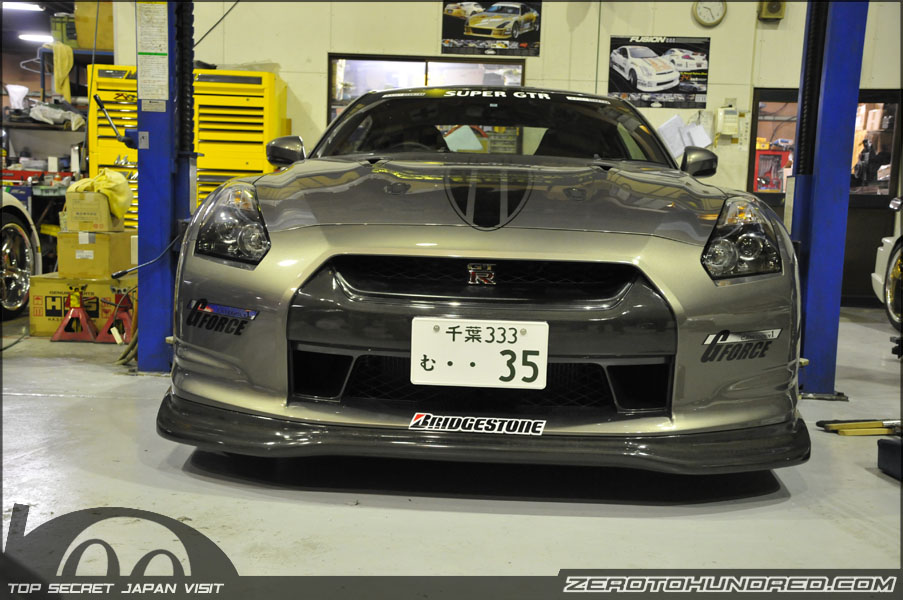
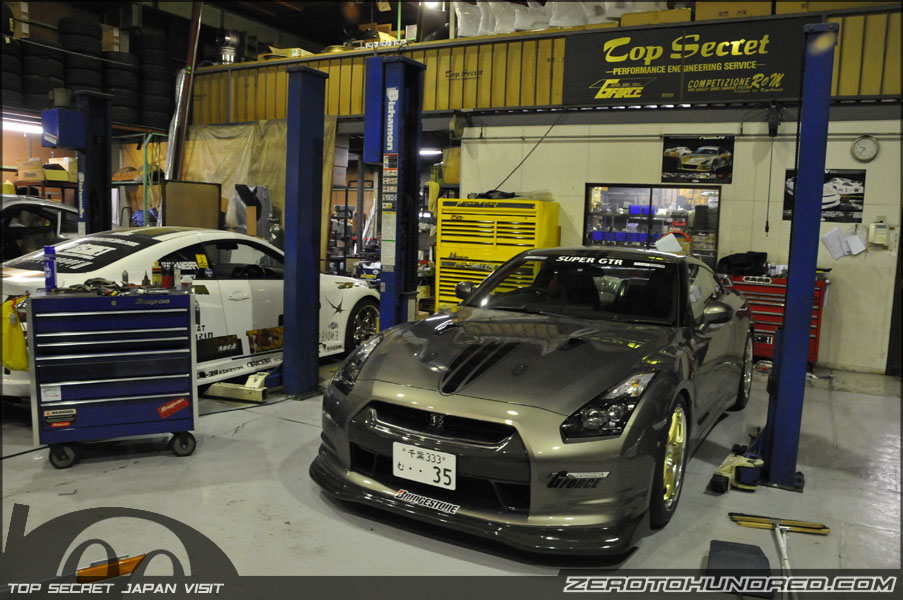
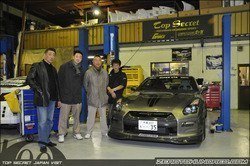
I'm not a big fan of bright colors, but this ^^^ looks really nice.
someone's already crashed one... :frown:
Although the Nissan GT-R will sticker for about $69,000 when it goes on sale in the U.S. later this year, prospective buyers will be hard pressed to find any Nissan dealers to offer the supercar at that price. The combination of the GT-R's limited availability and Nissan's lack of dealer pricing control could see some of the turbocharged coupes going for as high as $129,000 — nearly double the car's MSRP.
Exhaustnote.com called on 15 Nissan dealers through the United States and found that the GT-R will command at least $20,000 over its window sticker. Several dealers even said they were going to handle GT-R sales like an auction, pitting prospective buyers against one another.
One dealership in Carson, California said they would markup the GT-R by about $50,000 — joking the markup would be about the same as a new Nissan 350Z and Sentra.
The highest markup found was $60,000, bringing the GT-R's out-the-door price to a staggering $129,000.
The huge markups are due to extremely limited availability of Nissan's latest supercar — only 1,500 GT-Rs will be available in the U.S. this year. Most dealerships will only get 2 or 3 cars, but most have waiting lists at least 40 people deep.
While Nissan has counseled its dealers on markups — one of the GT-R's greatest assets was supposed to be amazing performance at a value price — the Japanese automaker has no control over how much dealers will actually charge.

Heard that the ecu has been cracked and they bumped the boost to get 525hp whp!
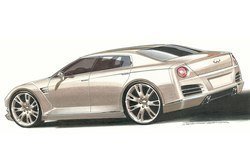

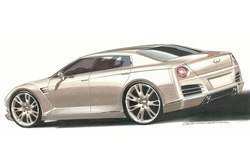
A senior Nissan source has confirmed the company is studying the possibility of producing a high-performance four-door sedan based on the exotic Nissan GT-R hardware. The source suggested the car may be sold as an Infiniti.
Producing a four-door GT-R is certainly feasible, though it wouldn't be cheap. Although the GT-R coupe is based on Nissan's flexible FM (front midship) platform, it is what one analyst calls "a major deviation" from that platform's architecture, to the point where it's known internally as PM (premium midship).
The PM platform could be stretched to allow an extra set of doors and useable rear passenger space, while keeping the existing suspension pickup points, powertrain mountings, and other sheetmetal. This would enable the four-door to share a lot of the GT-R's mechanical hardware, including the 480-horsepower twin-turbo 3.8-liter VR38 V-6 engine, all wheel drive, and the rear-mounted six-speed DSG-style auto-clutch transmission.
However a sedan version would require a new bodyside, plus expensive revisions to the carbon fiber intensive front structure, so while Nissan could save some money through component sharing with the GT-R, it's likely that a sedan variant would cost $3000 to $5000 more. One alternative would be to make the car with a conventional steel body (it would add weight, but Nissan would want the GT-R coupe to remain its performance flagship anyway).
The drawings here are purely illustrative; it's unlikely Nissan would retain too many GT-R cues on an Infiniti-badged car. Nissan knows a four-door GT-R would have about as much credibility in Japan as a four-door Corvette would here in the U.S. Furthermore, American and European buyers likely would balk at the idea of paying $85,000 for a sedan with Nissan badges. Making the car an Infiniti could help solve both problems, and it would give the brand the halo vehicle it lacks.
A high-tech, high-performance Infiniti sedan also could serve as a halo car for the expansion of Nissan's luxury brand into Europe, China, Japan, and other world markets. After dithering for a decade or more, Toyota has finally made Lexus a global brand, and its new IS-F sedan signals an entry into the premium high-performance segment dominated by Mercedes-Benz's AMG and BMW's M cars.
The significance of both moves won't have been lost on Nissan CEO Carlos Ghosn.